
From Children’s Home to Australia: The Story of Oxana and Her BUDDY, Janka
Oxana Rybárová grew up in an environment where childhood was not associated with carefree days, but with fear. She was born in a Roma settlement, later lived with her siblings in a crisis center, and then returned home for a while. But it did not take long before the situation at home worsened again – her father drank, was violent, and the children would hide under the bed or in the wardrobe from social workers. In the end, they were taken out of school and placed in a children’s home. Today, Oxana says that she carries both relief and gratitude from that period, but also hurt and deep wounds – and that although it marked her, it also made her stronger.

The children’s home gave Oxana a sense of safety she had never known before. She had children there who felt like siblings, and caregivers who gave her love and understanding. At the same time, however, she remained part of an environment that can protect a child materially, but cannot replace someone who is “just theirs” – one adult they can rely on outside rules, routines, and the collective. And that later proved decisive.
When she was about 14, we enrolled her in the BUDDY program. In a conversation with our BUDDY psychologist, she said that she wished for an adult friend – someone she could talk to, someone who would listen and try to understand her. At the time, the home had strict rules: she could not simply go out with friends or have a mobile phone, and as a spontaneous girl, she felt the need to go somewhere, meet someone, and talk.
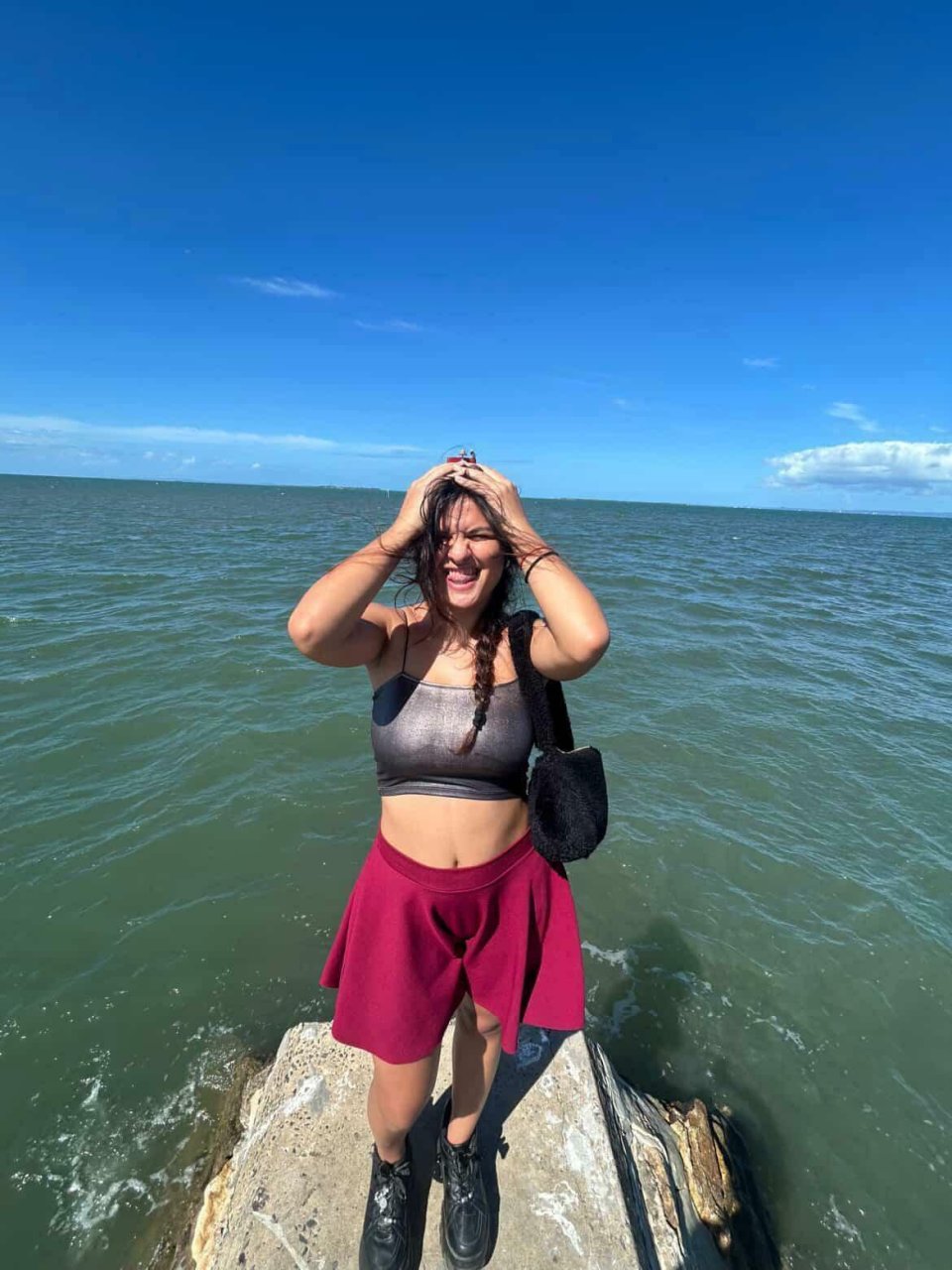 On the other side was BUDDY volunteer Janka Kropáčková, who was drawn to volunteering by the desire to do something that would truly matter. She was looking for a way to be useful, and the idea that even a few hours a week could significantly change a child’s life resonated deeply with her. She entered the program after successfully completing a comprehensive selection process that lasted nearly a year and included various interviews, training sessions, and a psychological assessment. We also prepared her for the fact that the relationship might not be easy. But Janka focused one hundred percent on what she could offer the child – not the other way around.
She and Oxana met for the first time in the children’s home, where Janka came to visit her. Right from that day, they went for a walk together and talked the whole time. From the very beginning, what mattered most was that they were talking and that Oxana felt she was truly being listened to. Their relationship was built slowly, through regular meetings, gradual trust, and ordinary conversations that later turned out to be the most important thing of all.
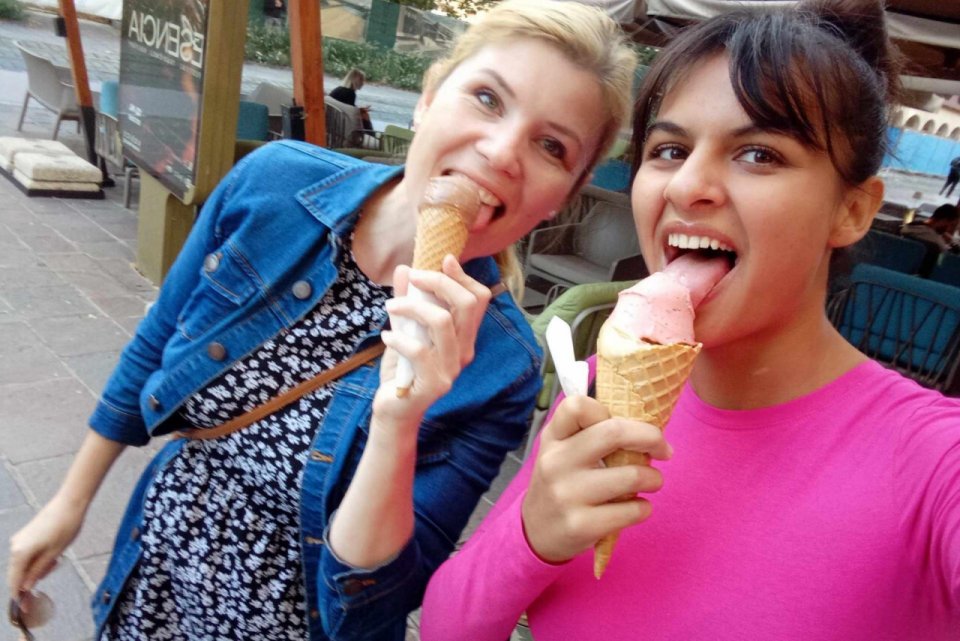
Over time, the BUDDY pair built a strong relationship that went beyond the standard weekly meetups. When the Kropáček family was given the opportunity to move to Australia, they began to wonder whether this could also be a chance for Oxana. They knew that the transition to independent life is difficult for a young person leaving a children’s home, and that such an opportunity could offer Oxana new experiences and possibilities. So they decided to invite her with them and began looking for a way to make it happen. They created a fundraiser on the Donio platform to help cover the costs connected with her departure, her studies, and the start of her new life in Australia.
 Oxana herself says that she does not trust everyone one hundred percent, because she has already experienced promises that were never fulfilled. That is also why, at first, she was afraid to even talk about the possibility of moving to Australia. She did not want to face another disappointment, and she did not want to have to explain to anyone why it had not worked out. Only when things truly began to move – when the fundraiser was launched and Janka and her husband went to pay for the school – did she send Janka a message that captured the full weight of the moment: “Janka, it is really happening.” That was when she realized that Janka was one of the few people in her life who had made her a promise and actually kept it.
For Oxana, what mattered was not only the move abroad itself, but also what her relationship with her BUDDY gradually opened up within her. Thanks to ordinary conversations and shared time, she gained a feeling she had never experienced in the home or at school: that someone was there just for her and genuinely wanted to help. They met every week, and she had someone to confide in, to share what was troubling her and what made her happy, and to experience simple, nonjudgmental interest. Janka also emphasizes that children leaving care often have almost nothing – no background, no money, and no support network – which is why a stable relationship is so important for them.

Today, Oxana lives with Janka and her family in Brisbane, Australia, where she is also studying. Years ago, she was not even able to travel independently around Košice – she did not know how to check bus connections or take a tram, and she went nowhere on her own. In Australia, Janka and her family first accompanied her, but gradually gave her space to start functioning independently. It did not take Oxana long to get used to the new environment and the unfamiliar people, find her way around the city, and show everyone that she wanted to move forward. Today she studies English and works in a café. The Kropáček family’s goal is for her to gradually learn the language, gain experience, and build the confidence to stand on her own feet – and one day finally live the life she deserves.
Her experience and determination are not something to take for granted, however. Oxana also speaks openly about what happens to many young people after leaving a children’s home.She knows people who ended up on the street, barely surviving, using drugs, dealing drugs, or becoming involved in prostitution. She knows that the system does not give them the same start in life as children who have family, housing, and support.
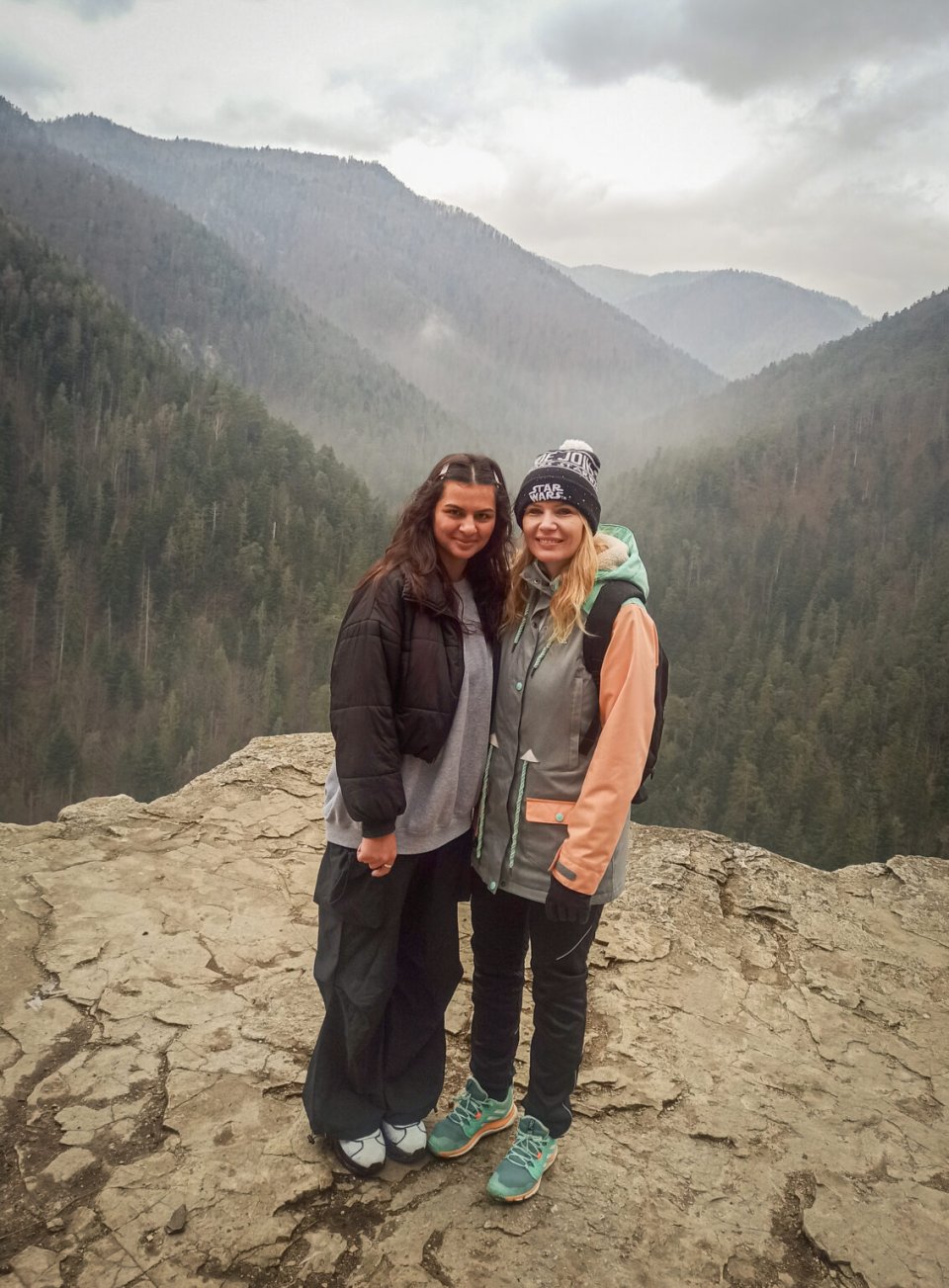 That is why she is fully aware of how exceptional the chance she received is – and that without the BUDDY program and without Janka, her life would most likely look completely different. And it is precisely in this contrast that the essence of her story stands out most strongly. Not in the dramatic twist of a girl from a children’s home making it to Australia, but in the fact that someone stood by her. That a child who once hid under the bed from adults grew into a young woman who can now speak about the future calmly and without fear. Because what changed the direction of her life was not going abroad, but having a relationship she can rely on.
Photographs: archives of Janka Kropáčková and Oxana Rybárová
Note: This blog was translated with the help of ChatGPT.